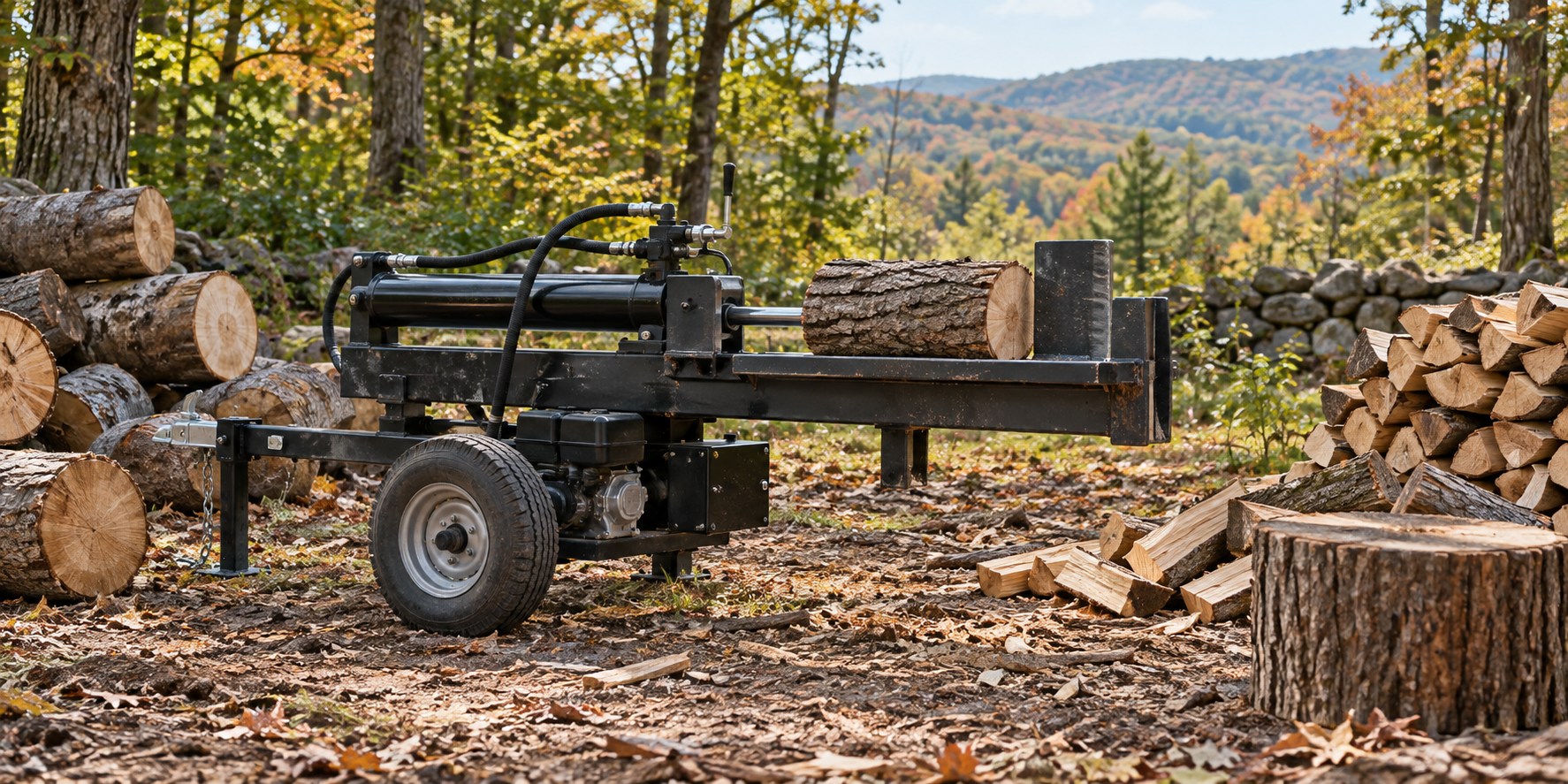
Log Splitter Buying Guide: Choose the Right Machine for Your Wood and Workload
This guide helps U.S. homeowners and small firewood producers choose a splitter type and configuration. It is a buying framework, not a ranking of specific models; specifications and availability should be confirmed for the exact machine before purchase.
Start with the wood you split, the amount you process, and the heaviest round you must move. For many homeowners who regularly split mixed firewood outdoors, a standalone, horizontal/vertical gas hydraulic splitter is the most flexible starting point. Choose a compact electric hydraulic splitter for modest, manageable logs near suitable power. If large rounds are routine, put vertical operation or a log lift ahead of extra advertised tons. These are editorial judgments about fit, not claims that one machine suits every buyer.
The right splitter at a glance
| Your situation | Our starting point | Check before buying | Main trade-off |
|---|---|---|---|
| Occasional, manageable rounds near the house | Compact electric hydraulic splitter, or rent | Outlet, cord requirements, rated log length and diameter | Less carrying and engine upkeep; limited capacity on difficult wood |
| Several cords of mixed firewood each year | Standalone horizontal/vertical gas hydraulic splitter | Your difficult rounds, beam height, cycle time, parts support | Flexible and mobile; fuel and engine maintenance |
| Heavy rounds you cannot repeatedly lift | Horizontal/vertical hydraulic splitter | Stability and working position in vertical mode | Avoids lifting a whole round to beam height; ground-level work may still mean bending |
| Heavy rounds plus frequent, long sessions | Hydraulic splitter with a log lift and a useful table | Lift capacity, controls, footprint, service | Less manual handling; larger purchase and storage commitment |
| Tractor owner with suitable hydraulics | Compatible 3-point hydraulic splitter | Hydraulic flow and pressure, hitch and couplers, tractor availability | One less engine; splitter occupies the tractor |
| Straight-grained wood staged for rapid splitting | Kinetic splitter worth comparing | Difficult-wood behavior, controls, orientation | Very short machine cycle; speed alone may not speed the whole woodpile |
| Firewood sold or split in high volume | Fast hydraulic setup with lift, table, and suitable wedge options | Actual workflow, support, operator safety | Higher throughput potential; much higher cost and complexity |
These are starting points, not promises about a tonnage class. For example, DR's compact electric PILOT 6TE is rated for 20-inch-long, 10-inch-diameter logs and lists a 26-second average cycle, while an Oregon 28-ton horizontal/vertical manual lists a 24.5-inch maximum log length and an 11-second cycle. Those figures describe particular models under their makers' conditions; they are not category-wide limits or real-world cords-per-hour results.
Our recommendations by use case
- Best starting point for a typical homeowner: A serviceable, standalone horizontal/vertical gas hydraulic splitter, sized for the hardest wood you split regularly. We value the ability to work with lighter rounds on the beam and put occasional heavy rounds on the ground.
- Best for occasional, smaller firewood near an outlet: A compact electric hydraulic splitter. Check the exact electrical and log-size requirements first; consider renting if the work comes in one short annual burst.
- Best for oversized rounds: A horizontal/vertical model if ground-level positioning is practical. For repeated large-round handling, we would pay for a properly rated log lift before paying only for a higher force number.
- Best for a tractor owner: A 3-point splitter only when the tractor's hydraulic output and connections match the attachment and the tractor can stay parked at the splitter. Otherwise, a standalone machine may make the wood-moving workflow easier.
- Best for high-volume, relatively uniform wood: A faster setup with a table and, where the wood and desired split size justify it, an adjustable or removable multiway wedge. Those upgrades pay off when logs are staged and finished pieces can leave the work area promptly.
How we reached these recommendations
We have not physically tested the machines discussed here, measured splitting force, or timed a full woodpile. We used manufacturer specifications and manuals for model limits, operating requirements, and safety instructions. We used owner discussions to identify questions buyers often discover after purchase, such as beam height, repeated lifting, and tractor availability. Forum reports are experience, not controlled comparisons or representative survey data. Our recommendations weigh wood difficulty, round handling, work location, throughput, serviceability, and cost without a fabricated score.
First, define the job
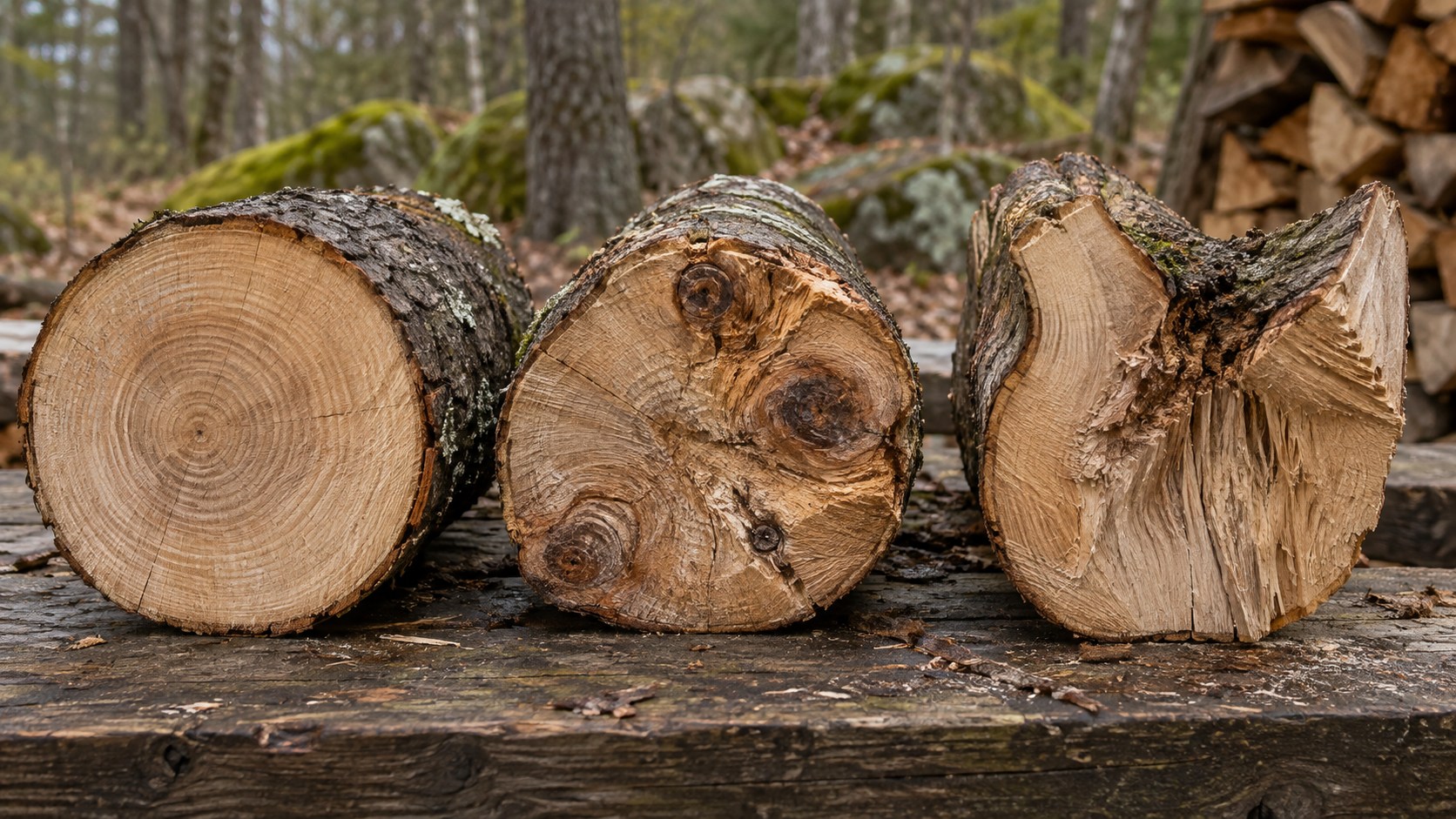
Annual volume sets the ownership question. Count what you actually split, including pieces you split again to fit a stove, rather than counting only rounds. A cord is a 128-cubic-foot stack measuring 4 by 4 by 8 feet, including air spaces; it is a useful workload measure, not a direct predictor of splitting time. Someone processing a small batch once a year may get better value from renting or buying split firewood. Someone splitting several cords every season has stronger reasons to prioritize comfortable working height, parts access, and a steady workflow.
Wood difficulty sets the capability question. Make a list of the species and the worst routine pieces: straight-grained rounds, knots, crotches, twisted grain, and stringy wood behave differently. A machine that handles clean, moderate rounds may struggle with your repeated difficult pieces. We would keep some reserve for that normal worst case, then handle rare outliers another way if a substantially larger splitter would otherwise sit idle. Published force is a maximum hydraulic rating, not a promise that every round of a given diameter will split. Oregon explains that hydraulic force depends on pressure and cylinder area, and its manual warns that rated tonnage varies with mechanical and environmental conditions.
Round weight sets the handling question. Before comparing force ratings, ask whether you can safely get the largest routine round onto a horizontal beam. A listed maximum diameter says little about your ability to lift, rotate, and resplit that wood. If the answer is no, select a layout that brings the splitting surface to the round, such as vertical mode, or a machine with a rated log lift. Then check how the split halves will be supported and cleared.
How many tons do you need?
There is no reliable “X tons equals Y-inch log” rule. Diameter matters, but species, grain, knots, moisture, wedge design, and the machine's actual hydraulic performance also matter. We suggest choosing a force class that can handle your hardest recurring rounds, then compare complete machines. A higher force rating may be worthwhile for frequent difficult hardwood; it cannot fix a low beam, poor material flow, missing parts, or an unsuitable power source. Oregon's published range illustrates the trade-off: one listed 25-ton model has an 11.2-second cycle, a 30-ton model 12.9 seconds, and a 35-ton option is positioned for especially knotty, stringy wood. Those are model-specific claims, not universal thresholds.
When a seller quotes tonnage, ask what pressure the figure assumes and whether the specification applies to the exact engine, pump, and cylinder combination offered. For a tractor attachment, the tractor's available pressure affects attainable force and hydraulic flow affects cycle speed. A 3-point splitter's headline rating may therefore differ from its performance on your tractor.
Electric, gas, or tractor powered?
| Power choice | Our take | Confirm first | Main limitation |
|---|---|---|---|
| Electric hydraulic | Modest logs close to suitable power; intermittent use | Motor requirements, outlet/circuit, permitted extension cord, log limits | Power access and model-specific capacity |
| Gas hydraulic | Outdoor work away from outlets; mixed wood and repeated sessions | Engine support, starting, fuel storage, transport | Exhaust, noise, and engine maintenance |
| Tractor hydraulic or PTO pump | Owner already has a compatible tractor | Required flow, pressure, couplers, hitch, PTO setup if used | Tractor is committed to the splitter while attached |
Electric is our preference when it matches the wood and site. A compact electric model avoids gasoline-engine upkeep and can work where a gas engine's exhaust makes operation inappropriate. It still has a hydraulic system and a hard operating envelope. For example, DR specifies its PILOT 6TE as a 120-volt, 1,090-watt, 6-ton hydraulic model with 20-inch length and 10-inch diameter limits. Check the exact manual for circuit and extension-cord requirements rather than assuming every household outlet or cord setup is adequate.
Gas is our preference for remote work and broader homeowner flexibility. It can be brought to the wood without arranging power, and horizontal/vertical gas models are widely documented. The price of that flexibility is engine care, fuel, noise, and exhaust. Never run a gasoline-engine splitter in a garage, shed, or other enclosed space; follow the engine and splitter manuals. Oregon's manual also requires routine checks of engine oil, hydraulic oil, hoses, and fasteners.
Tractor power makes sense only after a compatibility check. Distinguish a splitter supplied by tractor remotes from a PTO-driven kit with its own pump and reservoir. Confirm which hydraulic flow figure the tractor can deliver to the attachment, available pressure, couplers, return path, hitch category, and any PTO horsepower or speed requirements. Then ask whether the tractor is needed at the same time to move rounds or finished wood. That last question can outweigh the appeal of maintaining one less engine.
Horizontal, vertical, and log-lift layouts
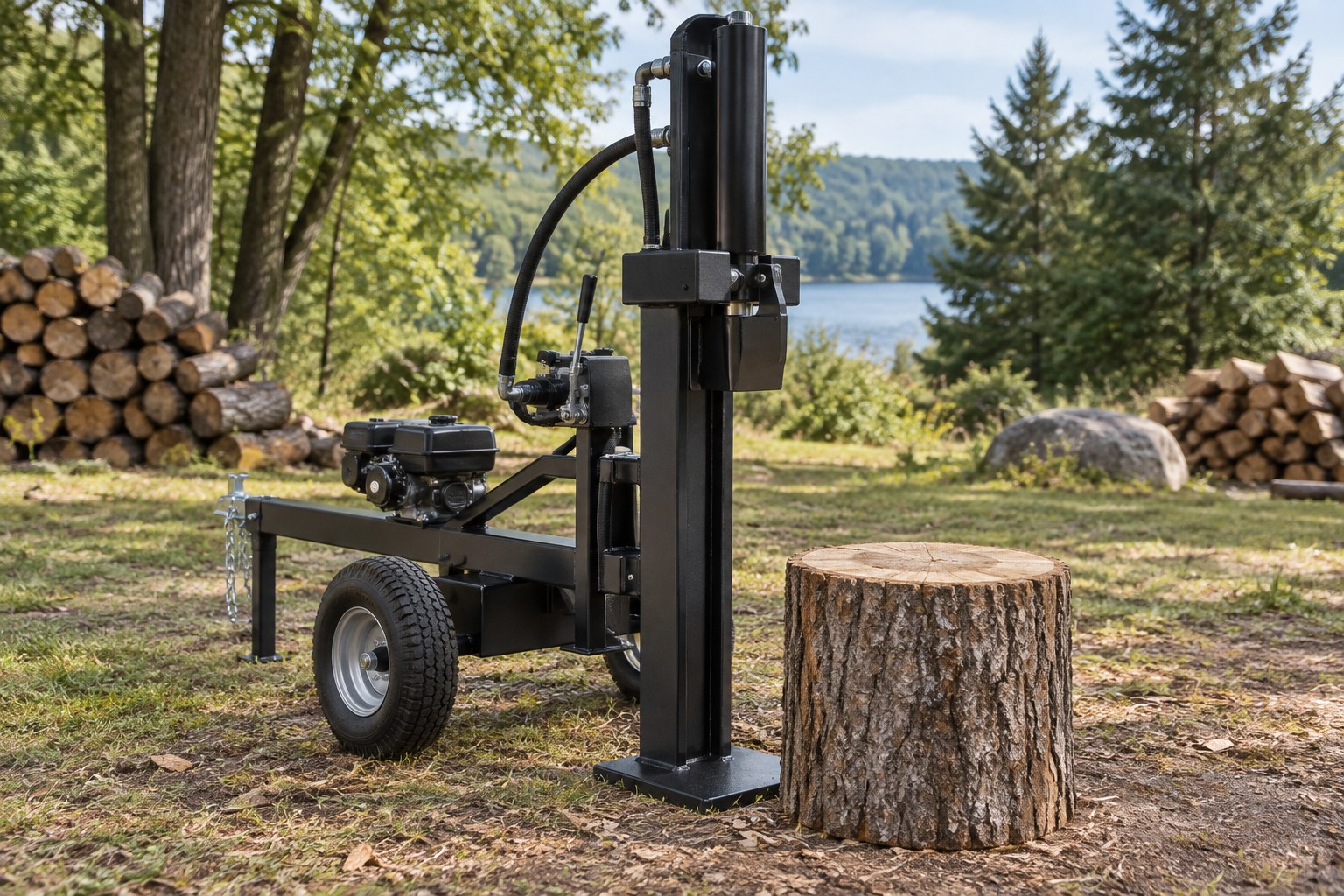
Horizontal splitting works well when you can place rounds on the beam repeatedly. The buying details are beam height, stable log support, control position, and a table or cradle that catches pieces for another pass. A horizontal-only model with an impressive force rating is a poor fit if each round is too heavy to lift.
Vertical mode is useful for occasional heavy rounds. With a convertible splitter, you can position a round on a foot plate near the ground rather than lifting it to beam height. It can still involve kneeling, bending, and repositioning split halves, so try the posture before treating vertical mode as a complete ergonomic solution. Oregon's horizontal/vertical manual describes placing the foot plate squarely on stable ground and locking the beam before use.
A log lift is our preferred upgrade when heavy rounds are routine. It addresses the repetitive lift that a force upgrade does not. A table or cradle can also keep halves at working height, reducing how often the same wood is picked up from the ground. Owner discussions repeatedly raise working height, lifts, and tables as practical buying criteria, but their reported productivity gains are anecdotal and depend on layout and crew size.
Speed: read the full workflow, not just the cycle time
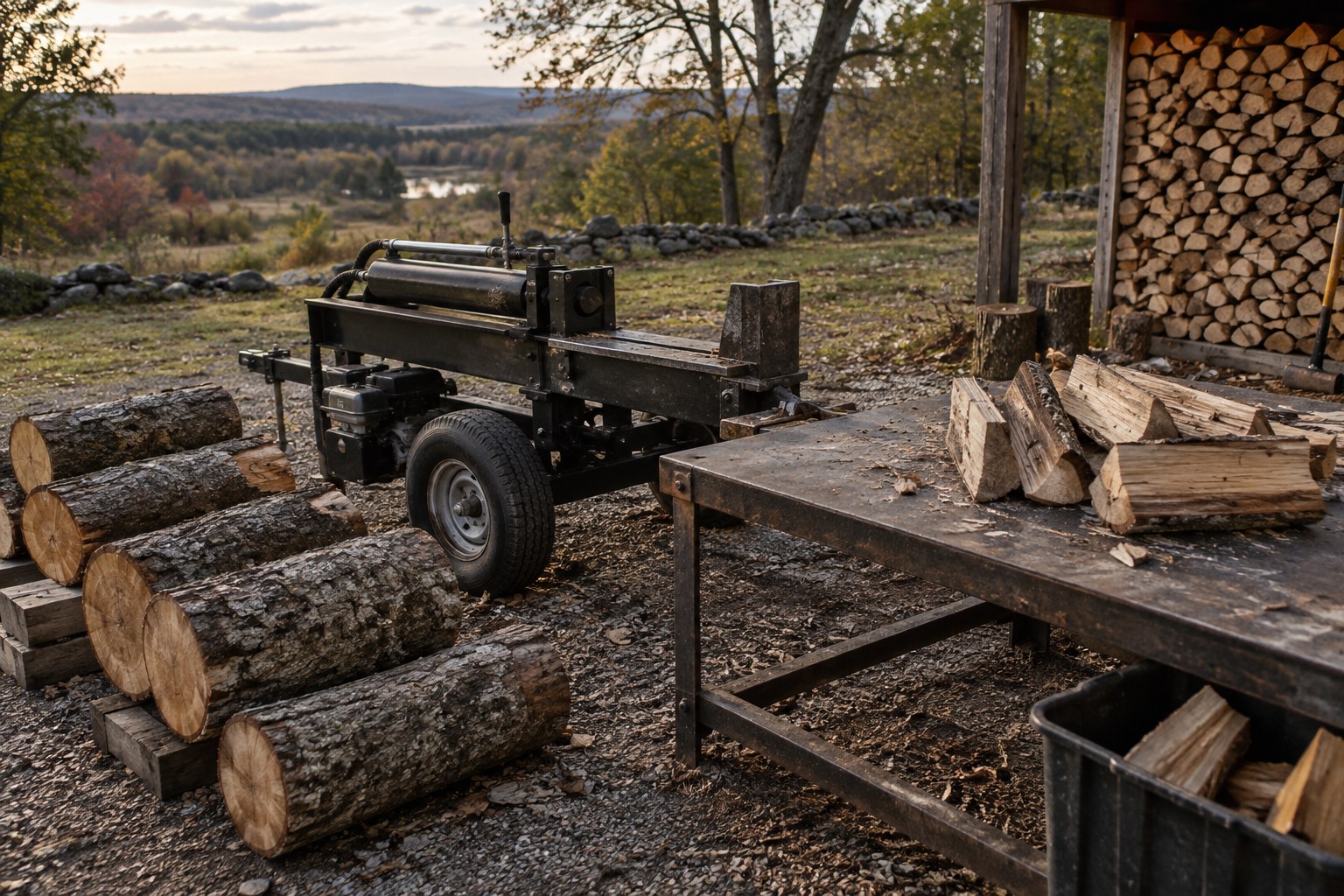
A published cycle time is the machine's stated ram travel and return time under its defined conditions. It is useful for comparing similar configurations, but it is not the time to select a round, place it, split it into stove-size pieces, clear the table, and stack the results. Oregon explicitly qualifies its 11-second rating for the 28-ton model as dependent on mechanical and environmental conditions.
Ask what is waiting most often: the operator or the ram? If a helper keeps logs staged and pieces moving, a faster return and shorter cycle may matter. If one person spends most of the session rolling rounds and clearing wood, a table or lift may save more effort than shaving seconds off the full-stroke number. Ask whether the ram can be reversed after a partial stroke, whether return is automatic, and whether controls can be used comfortably from the prescribed operator position. Do not assume auto-return means unattended or automatic splitting.
Kinetic splitters deserve a look when fast cycles match the wood and workflow. They use stored flywheel energy rather than the sustained push of a hydraulic cylinder. Oregon's kinetic manual lists a 2-second cycle for one model; that is a machine specification, not a four- or fivefold woodpile productivity claim. We would compare a kinetic machine on your difficult rounds and its handling layout before choosing it for speed alone.
Features worth paying for
Working height and log support: We would check these in person. The beam should let the operator use controls from the maker's safe position without a long session of unnecessary bending. A cradle or table should hold a split half securely enough for the next pass without creating a reach across moving parts.
A log lift: Valuable when lifting heavy rounds is a recurring task. Check its rated load, how it lowers to receive a round, where you stand while using it, and how much room it needs beside the machine.
Auto-return and usable stroke: Useful when the ram often has to travel back after a split. Compare actual return behavior and whether you can stop the forward stroke early; a fast published full cycle can hide a slower routine.
Four-way or multiway wedge: We prefer a removable or adjustable option for uniform rounds and a consistent target split size. A fixed wedge can create pieces that still need resplitting or complicate irregular wood. Verify compatibility before adding one; Oregon specifies select 35-ton machines for one accessory and recommends roughly 12- to 16-inch rounds. That example does not establish a universal size rule.
Transport, service, and total cost
“Towable” is not a road-speed specification. Check the exact owner's manual for permitted speed, tire and wheel rating, hitch, safety chains, lights or registration needs where applicable, and whether you should carry the machine on a trailer. Oregon lists a 45-mph maximum for the wheels on one 28-ton model; do not apply that limit to another splitter. Confirm local road rules before travel.
Long-term parts support belongs in the purchase decision. Before paying, find the exact model's manual and parts diagram. Identify a source for hydraulic hoses, filter, seals or cylinder service, control valve, engine parts, and wedge components. Check where warranty service happens and what you would do if the machine fails mid-season. DR, for example, keeps manuals and parts lists for current and older splitters; that demonstrates documentation availability, not a guarantee that every replacement part will remain in stock.
Compare ownership with renting and delivered split wood. Include purchase price, storage space, fuel or electricity, hydraulic service, transport, your labor, and the value of having the machine ready when needed. Our opinion: renting is attractive for one concentrated annual job; owning becomes more persuasive when storms or irregular deliveries make the splitter useful throughout the year. There is no honest universal break-even point without your local rental and firewood prices and your annual volume.
A pre-purchase checklist
- Record the work: How many cords do you split per year, and how often must you resplit pieces?
- Bring your wood to the comparison: What are your largest routine rounds, hardest grain, and usual cut length?
- Plan each lift: Can you safely load, rotate, and clear the heaviest round and its halves?
- Choose the work site: Is suitable electrical power available? Will the machine operate outdoors and on stable ground?
- Check the exact specifications: Maximum log length and diameter, rated force, cycle definition, beam height, machine weight, and controls.
- Check the workflow: Vertical conversion, lift capacity, table/cradle size, return behavior, and wedge options.
- Check ownership: Transport limits, manual, replacement parts, local service, warranty, storage, and total cost.
If a candidate fails a requirement in steps 2 through 4, more advertised tons will not rescue the purchase.
Frequently asked questions
Is a 20- or 25-ton splitter enough for hardwood?
It may be, but “hardwood” is too broad to answer by tonnage alone. Judge the hardest routine rounds, including knots and crotches, against a candidate's actual performance and return policy. Published maximum force does not map cleanly to species or diameter. Oregon explains how pressure and cylinder area determine hydraulic force and cautions that rated force varies with conditions.
Is an electric log splitter worth it?
Yes, in our opinion, when your usual logs fit its limits and you split near appropriate power. It can be a simpler fit for occasional work and locations where gas exhaust is unsuitable. Verify the exact machine's capacity, electrical requirements, and working height. DR's PILOT 6TE, for example, lists 6 tons, a 20-inch maximum length, a 10-inch maximum diameter, and a 26-second average cycle; other electric machines differ.
Should I choose vertical operation or a log lift?
Choose vertical capability for occasional rounds you cannot lift to beam height; consider a log lift when that task repeats all day. Vertical mode lets the round stay near the ground but can involve awkward posture and handling of halves. A lift plus table supports a more continuous horizontal workflow, at greater cost and size. That choice depends on handling frequency; check each machine's stability and lift rating.
Is a faster cycle always worth paying for?
Only if the ram is a real bottleneck in your setup. Published cycles describe machine motion, not wood stacked per hour. A solo operator handling heavy, irregular rounds may benefit more from a better table, lift, and working height. A staged crew may benefit more from a fast return. Oregon qualifies its cycle times by operating conditions, so compare them as specifications rather than guaranteed output.
Can I use a gas log splitter in a shed?
No. Gas-engine splitters produce exhaust and must not be run in an enclosed space. If the splitting site is indoors or semi-enclosed, consider an electric model only if its manual permits that location and the electrical setup is suitable. Keep hands and feet clear of the wedge and ram with either power source, and follow the specific operator manual.
Our final recommendation
Buy for the woodpile you process most years. For most homeowners, we favor the least complicated splitter that handles the hardest recurring wood, lets you move rounds safely, and has dependable parts support. Start with a compact electric machine when the work is modest and close to power; move to a horizontal/vertical gas hydraulic machine when wood, location, or volume demand more flexibility. Pay for a lift, table, and better working height when repeated handling is the real burden. Treat tonnage and cycle time as supporting specifications, not the buying decision by themselves.
References
Oregon Products. 28-ton horizontal/vertical log splitter owner's manual. Model specifications, rated-condition caveats, operating positions, towing, maintenance, and safety instructions.
Oregon Products. How log splitters work. Hydraulic force and flow explanations.
Oregon Products. Log splitter range. Manufacturer examples of force classes and cycle ratings.
Oregon Products. Kinetic log splitter owner's manual. Model-specific kinetic cycle and operating information.
Oregon Products. 4-way wedge specifications. Exact model compatibility and recommended round diameter.
DR Power Equipment. PILOT 6TE specifications. Model-specific electric motor, log-size, force, and cycle specifications.
DR Power Equipment. Log splitter product support. Current and historical manuals and parts-list access.
Penn State Extension. Valuing standing timber. Cord definition.
Firewood Hoarders Club. Which splitter, or what to look for and what to avoid?. Owner anecdotes used only to identify buying concerns.
Forestry Forum. Looking for new commercial splitter. Owner anecdotes about working height and lifts, used only as qualitative context.
Occupational Safety and Health Administration. Log-splitter accident detail. Example of the hand-injury hazard at the wedge.
National Institute for Occupational Safety and Health. Preventing carbon monoxide poisoning from small gasoline-powered engines and tools. Guidance on enclosed and partially enclosed use.